The Sacred Valley of the Incas is not just a stop between Cusco and Machu Picchu. It is one of the most useful areas to understand the Andes, Inca engineering, local agriculture, traditional towns, and travel logistics in southern Peru.
The valley is long, so the altitude changes depending on the town. Around Urubamba (9,416 ft / 2,870 m), the Sacred Valley is lower than Cusco (11,152 ft / 3,399 m), which makes it a good place to rest, walk, eat, and adjust before visiting Machu Picchu (7,972 ft / 2,430 m) or starting a trek.
Many travelers rush through it in one day. They see a market, one ruin, maybe a salt mine, then leave. That works if time is tight. But if you can stay longer, the Sacred Valley gives more context than a fast photo stop. It explains why this area mattered so much.
The Sacred Valley Is Easier on the Body Than Cusco
Cusco is high. Some travelers arrive and feel okay, then a few hours later they get a headache, short breath, poor sleep, or nausea. Classic altitude surprise.
The Sacred Valley is lower, especially around Pisac (9,776 ft / 2,980 m), Calca (9,570 ft / 2,917 m), Yucay (9,374 ft / 2,857 m), and Ollantaytambo (9,350 ft / 2,850 m). That difference matters. It is not magic, but many travelers feel better sleeping in the valley than in Cusco during the first days.
Good for Acclimatization
If you have time, spend one or two nights in the Sacred Valley before Machu Picchu or a high-altitude trek. This helps if your next plan includes Salkantay Pass (15,190 ft / 4,630 m), Rainbow Mountain / Vinicunca (16,522 ft / 5,036 m), or Humantay Lake (13,779 ft / 4,200 m).
Use the valley for light walking, good meals, and better sleep. Do not turn acclimatization into a full-day uphill hike with no water. That is how the body says “nope.”
It Has Some of the Best Inca Sites Outside Machu Picchu
The Sacred Valley was important because of its climate, fertile land, river access, road connections, and strategic position. The Inca state used the valley for agriculture, administration, religion, and defense.
The sites here are not copies of each other. Each one has a different function and layout.
Pisac Archaeological Site
Pisac is one of the strongest archaeological stops in the valley. The site is above the town and includes terraces, ceremonial areas, residential sectors, military-style viewpoints, and a large cemetery zone on the cliffside.
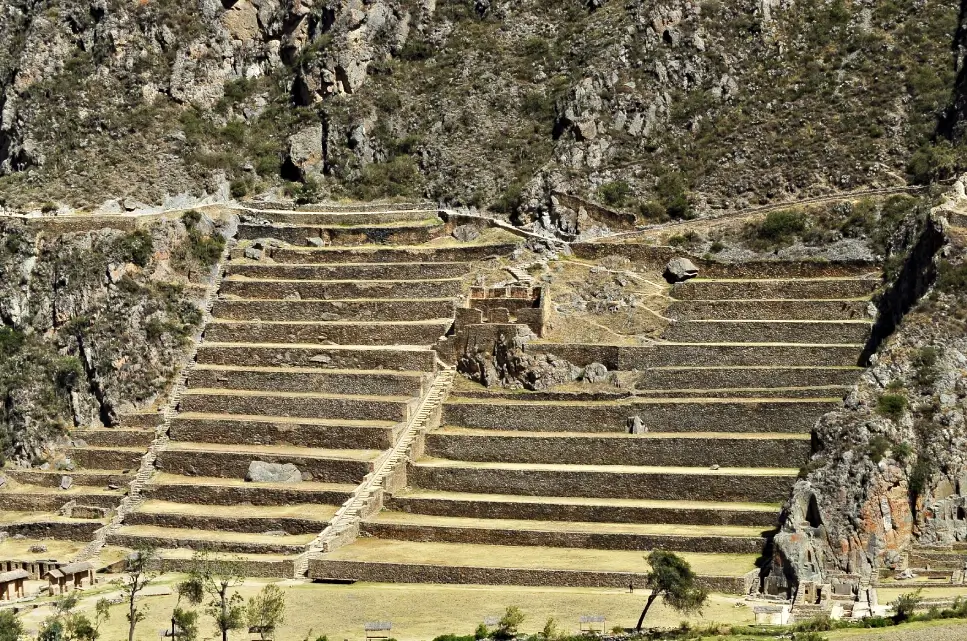
The terraces are not decoration. They controlled erosion, created farming surfaces, and managed water. From the upper areas, you can also see how the site controlled access through the valley. It is practical, strategic, and very well placed.
Pisac is a good first site because it shows how Inca architecture worked with steep mountain terrain. It is also a leg check. The site has stairs and exposed paths. Go slow if it is your first day.
Ollantaytambo Archaeological Site
Ollantaytambo is one of the most important towns in the Sacred Valley because it is both a living town and an archaeological site. The old Inca urban layout is still visible in the streets, walls, canals, and building bases.
The main archaeological area has terraces, stairways, platforms, ceremonial spaces, and large stone blocks that were transported from quarries on the opposite mountain. That detail is not small. Moving those stones across the valley required planning, labor, ramps, roads, and serious organization.
Ollantaytambo is also a major train point for Machu Picchu, so many travelers pass through. The mistake is only using it as a train station. Stay longer if you can.
Chinchero
Chinchero (12,343 ft / 3,762 m) is higher than most towns in the valley. It has Inca terraces, colonial architecture, textile workshops, and wide views of the surrounding mountains.
This is a good place to understand textiles, natural dyes, weaving techniques, and how local families still explain traditional production. Some demonstrations are very commercial. Others are useful. Ask questions. If they explain cochineal dye, alpaca fiber, weaving tools, and washing roots, stay. That part is worth it.
Moray
Moray (11,483 ft / 3,500 m) is one of the most technical sites in the region. It has circular terraces that are often linked to agricultural testing because the levels can create different temperature and humidity conditions.
The site is not huge, but the design is smart. It shows how farming in the Andes was not random. Altitude, slope, soil, water, and temperature all mattered.
This is the kind of place where a guide helps. Without context, some visitors only see “big circles.” With context, it becomes an agricultural laboratory. Different trip.
Maras Salt Mines
The Maras Salt Mines (10,499 ft / 3,200 m) are active salt pools fed by a salty spring. Local families still work many of the pools. The salt is collected, dried, packed, and sold in different forms.
This is not an Inca ruin in the same sense as Pisac or Ollantaytambo. It is a working cultural landscape. Stay on marked paths. Do not step into the pools. It sounds obvious, but somebody always needs the reminder.
It Connects History With Daily Life
One reason to visit the Sacred Valley is that history is not separated from daily life. People live beside old walls, farm near ancient terraces, sell vegetables in markets, and use routes that still follow the logic of older roads.
This makes the valley easier to understand than a museum-only visit.
Living Towns
Urubamba is the practical center of the valley. It has hotels, restaurants, markets, banks, transport access, and a calmer pace than Cusco. It works well as a base.
Pisac is useful for its market, cafés, and archaeological site. It has a more alternative traveler scene, with yoga centers, small guesthouses, and vegetarian-friendly places mixed with local life.
Ollantaytambo feels more compact and historical. Its narrow streets, water channels, and stone foundations make it one of the best places to walk slowly and observe structure, not just views.
Calca is less touristy and more local. It is useful if you want a quieter stop, simple food, or access to nearby rural areas.
Yucay is calm and often used for hotels, gardens, and relaxed stays. It is not a big nightlife town. Good. That is the point.
The Valley Is Good for Food
The Sacred Valley is one of the best areas near Cusco for food because it has good agricultural conditions and many restaurants using local ingredients. Corn, potatoes, quinoa, herbs, cheese, trout, avocado, fruits, and vegetables are common.
Local Dishes to Try
Try simple food first:
- Choclo con queso
- Trout
- Quinoa soup
- Andean potatoes
- Alpaca steak
- Cuy, if you are curious
- Pachamanca
- Fresh fruit juices
Lamay (9,646 ft / 2,940 m) is known for cuy restaurants. Pachar (9,186 ft / 2,800 m) is useful for casual stops and craft beer. Around Urubamba and Yucay, you will find garden restaurants, buffets, hotel restaurants, and more polished dining options.
Pachamanca is a strong food experience if you have time. Meat, potatoes, corn, herbs, and other ingredients are cooked underground with hot stones. It is not fast food. It is a cooking method with local logic.
Small warning: do not eat a huge heavy lunch before a long van ride through curves. Your stomach may start a protest. Keep it smart.
It Is a Practical Route to Machu Picchu
The Sacred Valley is not only beautiful or historical. It is also practical.
Most travelers going to Machu Picchu use the train from Ollantaytambo to Machu Picchu Pueblo / Aguas Calientes. Staying in the valley before the train can reduce travel stress because you are already closer to the station than if you sleep in Cusco.
Why Ollantaytambo Works Well Before Machu Picchu
Ollantaytambo is one of the best places to sleep before an early train. You avoid the very early road transfer from Cusco, and you can reach the station faster.
This is especially useful if:
- Your Machu Picchu entrance is early
- You travel with children
- You want less stress
- You have luggage to organize
- You want to visit the ruins before the train
- You dislike waking up at 3:00 or 4:00 a.m.
Simple travel truth: a good location can save the whole day.
It Has Better Pace Than Cusco
Cusco is busy. It has traffic, nightlife, narrow streets, altitude, crowds, and many tours starting from the same center.
The Sacred Valley feels slower. Not empty, not silent, not untouched. Just slower.
That slower pace is useful if you are tired from flights, early tours, or altitude. You can walk, eat, visit one site, rest, and still feel that the day was used well.
Good for Families
Families often do better in the valley than in Cusco’s steep historic center. Hotels may have gardens, more space, easier access, and lower altitude. Kids can move around more.
Good for Older Travelers
Lower altitude and less urban pressure help. Choose hotels with easy vehicle access, avoid too many stairs, and plan tours with flexible timing.
Good for Hikers
The valley is a good base before harder routes. You can do short hikes, visit ruins, and prepare for longer treks without jumping directly into extreme altitude.
It Offers Different Types of Activities
The Sacred Valley is not only archaeological sites. It also has soft adventure, cultural workshops, markets, short hikes, cycling routes, rafting, zipline options, and food experiences.
Easy Activities
Good easy options include:
- Pisac market
- Short walks in Ollantaytambo
- Textile demonstrations in Chinchero
- Lunch in Urubamba
- Maras Salt Mines viewpoint
- Town walks in Yucay or Calca
These are useful for arrival days or recovery days.
Moderate Activities
Moderate options include:
- Walking through Pisac ruins
- Climbing the Ollantaytambo terraces
- Visiting Moray and Maras
- Short hikes near Urubamba
- Biking sections with guide support
These require more energy, but they are not full expedition-level activities.
More Active Options
More intense options include:
- Rafting on the Urubamba River
- Mountain biking
- Longer hikes near the valley
- Routes toward high passes
- Training days before treks
Do not overdo it before Salkantay or the Inca Trail. Save your legs. This is not the time to prove something to your backpack.
It Helps You Understand Inca Agriculture
The valley was valuable because it produced food. The climate is milder than higher areas, and the Urubamba River supports agriculture along the valley floor.
Terraces are everywhere for a reason. They protected slopes, expanded farmland, improved drainage, and helped create stable growing areas. When you visit Pisac, Moray, and Ollantaytambo, you see different versions of the same major idea: control the land, control the water, produce food, manage movement.
That is the technical core of the valley.
Machu Picchu is famous. The Sacred Valley explains part of the system behind it.
It Is Good for Markets and Local Products
Pisac market is the most famous, but it is not the only place to buy local products. You can find textiles, ceramics, silver jewelry, carved gourds, alpaca items, salt from Maras, chocolate, coffee, and natural-dye fabrics.
What to Buy
Useful items include:
- Maras salt
- Small woven textiles
- Alpaca scarves or hats
- Local chocolate
- Coffee
- Handmade ceramics
- Natural-dye products
Ask if the alpaca is real alpaca. Some cheap items are synthetic blends. That is normal in tourist markets, but you should know what you are paying for.
Market Tip
Carry small bills in soles. Bargain respectfully. Do not push too hard over tiny amounts. A few soles may matter more to the seller than to you.
The Weather Is Usually More Comfortable
The Sacred Valley is often warmer and lower than Cusco. Days can feel pleasant, especially around Urubamba, Yucay, and Ollantaytambo. Nights can still be cold.
Dry Season
The dry season is usually from May to October. This is better for views, outdoor activities, and train travel. It is also the busy period.
Bring sunscreen, sunglasses, a hat, and a jacket for evenings.
Rainy Season
The rainy season is usually from November to April. The valley becomes greener, but rain can affect roads, trails, and visibility.
Bring a rain jacket, shoes with grip, and flexible timing. Do not panic if it rains. Just do not dress like you are going to the beach.
Best Time to Visit the Sacred Valley
The best months are usually April, May, September, and October. These months often give a good balance of weather and crowd levels.
June, July, and August are popular and generally dry, but sites can be busier. November to March can still work, but rain is more likely.
If your main goal is photography, dry season is safer. If your main goal is fewer people and greener landscapes, shoulder months can be better.
How Many Days You Need
One Day
One day is enough for a basic tour. You can visit Pisac, Urubamba, Ollantaytambo, and maybe Chinchero depending on the route.
It is useful but rushed. You will see the main points, not the full rhythm.
Two Days
Two days is better. You can do one day for Pisac and Ollantaytambo, then another for Moray, Maras, and Chinchero.
This pace makes more sense. Less van time. Better meals. Fewer rushed photos.
Three Days or More
Three days is ideal if you want to sleep in the valley, visit sites properly, eat well, and continue to Machu Picchu without stress.
This is the version travelers usually enjoy more, even if they did not expect it.
Who Should Visit the Sacred Valley
First-Time Visitors
Yes. It gives historical context before Machu Picchu and helps with acclimatization.
Families
Yes. The lower altitude, open spaces, and flexible routes are useful.
Hikers
Yes. It is a good preparation zone before treks.
Food Travelers
Yes. Urubamba, Yucay, Ollantaytambo, and nearby rural areas have strong food options.
Travelers With Limited Time
Yes, but choose carefully. Do not try to include every site in one day. Pick the route that matches your next destination.
Simple Sacred Valley Itinerary
Day 1: Pisac and Urubamba
Start with Pisac market and ruins. Continue to Urubamba for lunch. Stay overnight in the valley if possible.
Day 2: Moray, Maras, and Ollantaytambo
Visit Moray and the Maras Salt Mines. Continue to Ollantaytambo for the ruins, town walk, dinner, and possible train connection.
Day 3: Machu Picchu Connection
Take the train from Ollantaytambo to Machu Picchu Pueblo. Visit Machu Picchu the same day or sleep in town and enter early the next morning.
This route is simple and works. No unnecessary chaos.
Final Recommendation
Visit the Sacred Valley because it gives you more than transport to Machu Picchu. It gives you lower altitude, strong archaeology, living towns, local food, agricultural history, markets, practical logistics, and a slower pace than Cusco.
For most travelers, the best plan is to spend at least one full day in the Sacred Valley. Two days is better. Three days is solid if you want to continue to Machu Picchu with less stress.
The Sacred Valley is not a side trip. It is one of the main parts of the Cusco region. Skip it only if your schedule is extremely tight. Otherwise, give it time. It earns it.