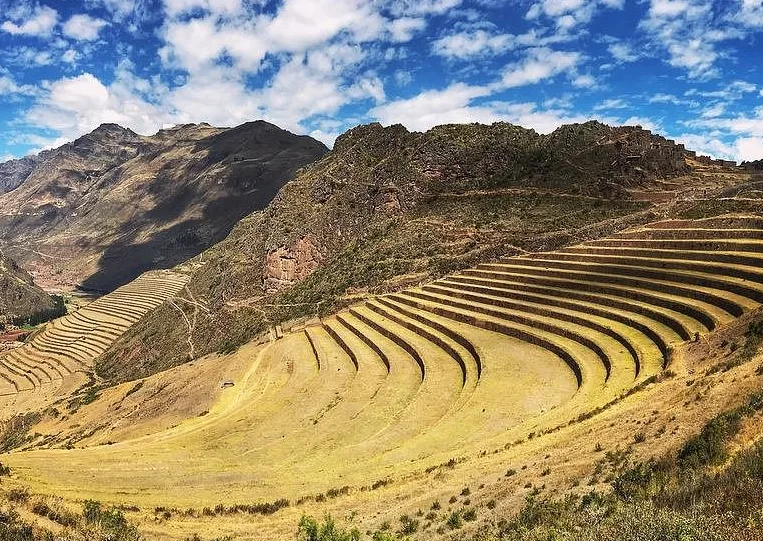
The Sacred Valley of the Incas, around Urubamba (9,416 ft / 2,870 m), is one of the best areas to eat outside Cusco. The food scene is not only “tourist lunch buffet.” You can find local markets, family restaurants, craft beer, coffee shops, pachamanca, fine dining, vegetarian cafés, and restaurants using ingredients from their own gardens.
The main food towns are Pisac (9,776 ft / 2,980 m), Urubamba, Yucay (9,374 ft / 2,857 m), Ollantaytambo (9,350 ft / 2,850 m), Maras (approximately 11,089 ft / 3,380 m), Lamay (approximately 9,646 ft / 2,940 m), and Pachar (approximately 9,186 ft / 2,800 m). Some altitudes vary by source and exact location, so treat them as practical travel references, not engineering data. PeruRail lists the Sacred Valley towns of Pisac, Calca, Urubamba, and Ollantaytambo between 2,850 and 2,980 meters, which is lower than Cusco (11,152 ft / 3,399 m).
Eating in the valley is easier than in Cusco for many travelers because the altitude is lower. Still, do not go wild with heavy food right after arriving. Cuy, alpaca steak, craft beer, trout, fried pork, cheese, sauces, and spicy ají can hit hard if your stomach is still adjusting. It happens. Nobody wants to remember the Sacred Valley because of a bad bathroom mission.
How to Choose Where to Eat
If You Are on a Sacred Valley Day Tour
Choose Urubamba or Yucay. These towns are located in the middle of the standard route between Pisac, Ollantaytambo, Moray, and Chinchero (12,316 ft / 3,754 m). They work well for lunch stops because they have large restaurants, garden spaces, buffets, and parking.
If You Are Taking the Train to Machu Picchu
Choose Ollantaytambo. It has restaurants close to the train station and the main square. Good option before boarding or after visiting the ruins. Just do not sit down for a slow lunch one hour before your train. That is how travelers start running with backpacks, and yes, it looks bad.
If You Want Local Market Food
Choose Pisac or Urubamba. Pisac is better for cafés and market-area food. Urubamba has more local restaurants and a real town feel.
If You Want a Special Food Experience
Choose Maras, Moray (11,706 ft / 3,568 m), or Ollantaytambo. This is where you find tasting menus, farm lunches, pachamanca, and restaurants connected to local production.
What to Eat in the Sacred Valley
Trout
Trout is common in the valley and often appears grilled, fried, or served with Andean potatoes. It is a safer choice if you want something local but not too heavy.
Alpaca
Alpaca is leaner than beef and is usually served as steak, lomo saltado, or in stews. Ask for medium or medium-rare only in trusted restaurants. In very local places, well-cooked is safer.
Cuy
Cuy, or guinea pig, is a traditional Andean dish. Lamay is known for cuyerías, small restaurants focused on roasted guinea pig. Some travelers love it. Others try one bite and say “okay, I did the cultural thing.” Fair enough.
Choclo con Queso
Large-kernel Andean corn with fresh cheese. Simple, filling, and good as a quick snack. You will see it near markets, viewpoints, and road stops.
Pachamanca
Pachamanca is meat, potatoes, sweet potatoes, fava beans, corn, herbs, and sometimes cheese cooked underground with hot stones. It is more than a dish; it is a cooking method. El Albergue in Ollantaytambo offers a daily pachamanca experience with a farm tour and cooking demonstration before the meal.
Chicha de Jora
Fermented corn drink. It is traditional, but not every version is easy for visitors’ stomachs. Try it in a clean, recommended place. Do not play hero with random roadside chicha before a train or long van ride.
Best Places to Eat in Urubamba
Urubamba is the most practical food base in the Sacred Valley. It has local restaurants, hotel restaurants, buffets, cafés, and easy transport access.
El Huacatay
El Huacatay is one of the better-known restaurants in Urubamba. It works well for dinner or a more careful lunch, not just a fast tour stop. The official site lists its address as Jr. Arica 620 and opening hours from Monday to Saturday, 12:30 p.m. to 8:00 p.m.
The food style is Peruvian with international technique. Expect sauces, local herbs, trout, alpaca, vegetables, and more polished plating than a normal menú restaurant. It is a good choice for couples, small groups, and travelers staying overnight in the valley.
Muña Restaurante
Muña Restaurante is a practical choice for travelers who want variety. Its official information mentions à la carte dishes, buffet, picnics, traditional food, vegan options, pasta, and grilled items.
This is useful for mixed groups. One person wants alpaca, another wants pasta, someone is vegetarian, and someone just wants soup because altitude is being rude. Muña can handle that type of group better than a small specialty restaurant.
AMA Restaurant
AMA is a more social-impact style restaurant in Urubamba. Its official site says the food is homemade and healthy, prepared by eight single mothers from the Sacred Valley, with ingredients sourced from the Urubamba market. It is located on Av. Mariscal Castilla 800 and opens dail
Go here if you want a simple meal, local ingredients, and a restaurant concept that supports local women. Not everything needs to be fancy. Sometimes good lunch and a clean table is the win.
Hawa Restaurant
Hawa is inside Tambo del Inka, a Luxury Collection Resort. It is better for travelers looking for a higher-end hotel restaurant with a controlled setting. Marriott describes Hawa as using organic ingredients from the hotel garden and lists service for breakfast, lunch, and dinner
This is not the cheapest meal in the valley, but it is useful for comfort, service, and a more formal dinner.
Tunupa Sacred Valley
Tunupa is a common buffet stop along the route between Urubamba and Ollantaytambo. Its official page presents it as a Creole buffet beside the Urubamba River. (
This is practical for day tours because groups need speed, clean bathrooms, parking, and many food options. It is not the most local hidden spot. It is more “tour logistics solved.” And sometimes that is exactly what you need.
Best Places to Eat in Pisac
Pisac is a good town for breakfast, cafés, light food, vegetarian options, and market-day meals. It is also a smart stop before or after visiting the archaeological site.
Cuchara de Palo
Cuchara de Palo is located inside Pisac Inn on the historic square. Its official restaurant page says it opens daily for breakfast, lunch, and dinner, with service from 7:00 a.m. to 9:00 p.m. and last orders at 8:30 p.m.
This is a safe pick if you want traditional Peruvian food with a cleaner restaurant setting. Good for families, couples, and travelers who want to eat near the plaza without guessing too much.
Kula Café
Kula Café is known for healthy, creative, flexitarian food in Pisac. Its social profile describes it as a place for healthy and creative cuisine, coffee, and boutique-style atmosphere.
This is better for brunch, coffee, smoothies, vegetarian plates, and travelers who want lighter food. After days of rice, potatoes, and meat, this kind of place feels like a reset button.
Blue Llama
Blue Llama is a café-style option near the main square. It is often used for breakfast, coffee, pancakes, juices, and casual meals. Independent travel listings describe it as a main-square café with breakfast options such as pancakes, French toast, fruit, and coffee.
Good for a relaxed start before the Pisac ruins. Not complicated. Sit, eat, move.
Best Places to Eat in Ollantaytambo
Ollantaytambo is one of the most useful towns for food because many travelers sleep here before taking the train to Machu Picchu. It has small cafés, restaurants around the square, and some stronger culinary options connected to local ingredients.
Chuncho
Chuncho is a restaurant-bar based on local ingredients and traditions from Ollantaytambo, the Urubamba Valley, and the Cusco region. Its official page describes its work around local flavors, ingredients, and traditions.
This is a good option if you want something more connected to the area than pizza or generic tourist food. Expect Andean ingredients, local produce, and dishes that may not look familiar if this is your first time in Peru. That is part of the point.
El Albergue Restaurant
El Albergue Restaurant works well for travelers staying near the train station or wanting a quieter meal. Its food page says the menu uses fresh organic ingredients from its garden and the Sacred Valley, with Peruvian and European-style dishes such as alpaca steak, salads, homemade fettuccine, and trout
It is especially convenient if you are catching a train. The location saves time. The food is also more stable than random last-minute train-station snacks.
El Albergue Pachamanca
This is different from a normal restaurant meal. The pachamanca experience is offered daily at 12:00 p.m. and 2:30 p.m., includes a farm tour and cooking demonstration, and lasts around two hours.
Do this if you have time. Do not book it right before a train. Pachamanca is slow food. Let it be slow.
Alqa Restaurant
Alqa is located in Ollantaytambo and is often described as a restaurant connected with Andean ingredients and a more creative style. Current public listings rate it as a restaurant-bar option in town, and recent travel food guides describe it as a more experimental space using traditional products from Andean farmers.
Good for travelers who want something different from the standard tourist menu. Check current hours before going because smaller restaurants in the valley can change schedules.
Best Places to Eat Near Maras and Moray
This area is useful if your tour includes Moray and the Maras Salt Mines. Food options are more spread out, so reservations matter more.
MIL Centro
MIL Centro is one of the most famous food experiences in the Sacred Valley. It is located next to the Moray archaeological site and describes itself as a journey at 3,568 meters above sea level.
This is not a casual lunch stop. It is a high-end tasting menu experience connected with research, Andean ecosystems, local ingredients, and food culture. Recent reporting describes MIL as a small 37-seat restaurant and research base linked to Mater Iniciativa, with experiences built around local communities, agricultural knowledge, and tasting menus.
Reserve well in advance. Also, check transport. You are not just walking there from town after buying a snack.
Best Places for Beer and Casual Food
Cervecería del Valle Sagrado
Cervecería del Valle Sagrado is in Pachar, between Urubamba and Ollantaytambo. Its official site lists several beer styles and taprooms, and the Pachar taproom is listed as open daily from 12:00 p.m. to 8:00 p.m.
This is a good stop for craft beer, casual food, and a break from formal meals. It works well after a Sacred Valley tour or before heading to Ollantaytambo, as long as your driver and schedule are sorted. Do not miss your train because of “just one more beer.” That is not a travel story you need.
Best Local Food Experience
Cuy in Lamay
Lamay is known for cuyerías, restaurants that serve roasted guinea pig. This is more local than polished. You usually get a large plate with cuy, potatoes, stuffed pepper, corn, and sauces.
Eat cuy here if you actually want the traditional version. If you are unsure, share one portion first. The flavor is strong, the presentation can be intense, and some travelers freeze for a second when the full animal arrives on the plate. Normal reaction.
Market Meals
Local markets in Urubamba and Pisac are useful for soups, fresh juices, fruit, bread, cheese, and simple lunch plates. These are budget-friendly and fast, but hygiene varies. Choose busy stalls, cooked food, and avoid raw salads if your stomach is sensitive.
Simple rule: hot, busy, cooked. That rule saves trips.
Best Options by Traveler Type
For Families
Choose Urubamba, Yucay, or Tunupa-style restaurants. Families usually need space, bathrooms, parking, flexible menus, and faster service.
Good options:
- Muña Restaurante
- Tunupa Sacred Valley
- AMA Restaurant
- Hawa Restaurant, if staying nearby or wanting a hotel setting
For Couples
Choose restaurants with a slower atmosphere and better plating.
Good options:
- El Huacatay
- Hawa Restaurant
- Chuncho
- El Albergue Restaurant
- MIL Centro, if the budget is high
For Backpackers
Choose Pisac cafés, market food, and casual spots in Ollantaytambo.
Good options:
- Kula Café
- Blue Llama
- market meals
- Cervecería del Valle Sagrado
- small menú restaurants near local squares
For Vegetarians and Vegans
Pisac is usually the easiest town for vegetarian-friendly food. Urubamba also has more flexible menus now.
Good options:
- Kula Café
- Muña Restaurante
- AMA Restaurant
- Cuchara de Palo
- selected hotel restaurants with advance notice
Always confirm if the soup base, sauces, and rice are fully vegetarian. In Peru, “vegetarian” sometimes means “no visible meat.” Ask clearly.
For Food-Focused Travelers
Choose places with local sourcing, tasting menus, pachamanca, and Andean ingredients.
Good options:
- MIL Centro
- El Albergue Pachamanca
- Chuncho
- El Huacatay
- Hawa Restaurant
Suggested Food Routes
If You Visit Pisac and Ollantaytambo in One Day
Breakfast in Cusco or Pisac.
Lunch in Urubamba or Yucay.
Coffee or light dinner in Ollantaytambo.
This works well because you avoid eating too late before the train or return drive.
If You Sleep in Ollantaytambo
Lunch in Urubamba or Pachar.
Dinner in Ollantaytambo.
Breakfast near the train station before Machu Picchu.
This is efficient. No unnecessary backtracking.
If You Stay Two Nights in the Sacred Valley
Day 1: Pisac café, Urubamba lunch, quiet dinner.
Day 2: Moray or Maras route with special lunch, then beer or light dinner near your hotel.
This is the better pace. Less rushing. Better stomach management too.
Practical Tips Before Eating in the Sacred Valley
Make Reservations for Better Restaurants
Reserve for El Huacatay, MIL Centro, Hawa, Chuncho, and El Albergue Pachamanca. Small restaurants can fill up, especially during high season.
Check Opening Hours
Schedules change. Some restaurants close one day per week. Some open only for lunch. Some hotel restaurants accept outside guests, but it is better to confirm.
Carry Cash
Cards work in many restaurants, but not everywhere. Markets, cuyerías, small cafés, and rural stops are easier with soles.
Eat Light Before Long Drives
The Sacred Valley roads have curves. Heavy lunch plus van ride is not a great combo. Keep it smart.
Confirm Dietary Restrictions
Vegetarian, vegan, gluten-free, and allergy requests should be mentioned before arrival when booking higher-end restaurants or group lunches.
Do Not Drink Tap Water
Use bottled or filtered water. For ice, choose trusted restaurants.
Final Recommendation
If you want the easiest food plan, eat lunch in Urubamba and dinner in Ollantaytambo. If you want cafés and lighter food, use Pisac. If you want local tradition, try cuy in Lamay or pachamanca at El Albergue. If you want a serious culinary experience, reserve MIL Centro near Moray.
The Sacred Valley has enough food options for every type of traveler. The key is choosing by route, not only by restaurant name. A good meal in the wrong town can become a logistics mess. A simple meal in the right place can save the whole day.