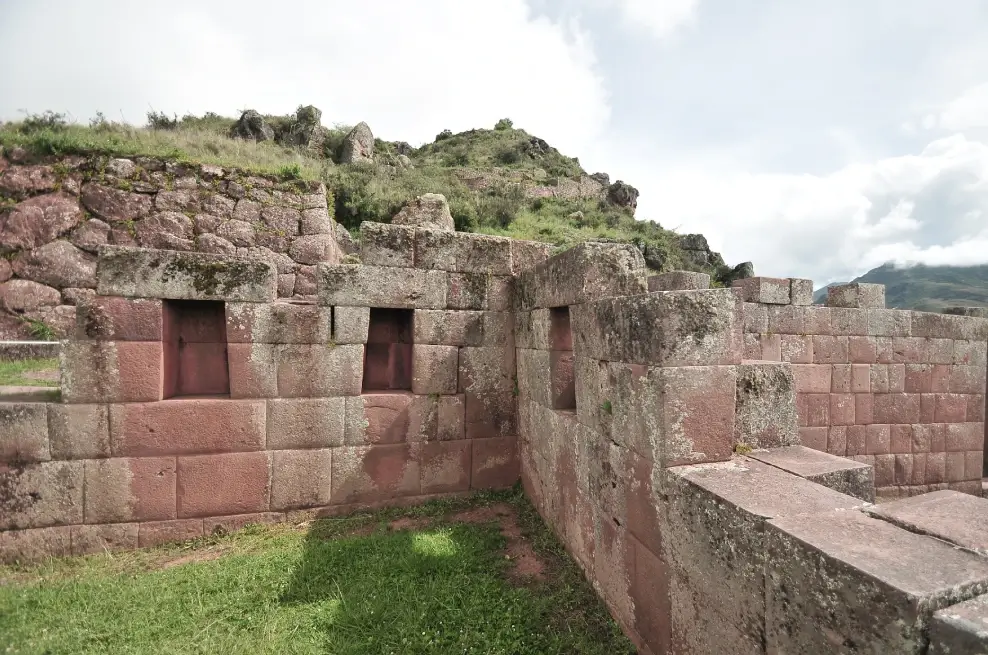
Cusco is not only the stop before Machu Picchu. It is a city with Inca walls, colonial churches, archaeological parks, markets, viewpoints, museums, and day trips that start early and end with tired legs. The historic center was listed by UNESCO in 1983, and its value comes from the mix of Inca urban planning and Spanish colonial architecture built over earlier structures.
The smart way to visit Cusco is to divide it into zones: the historic center, the nearby archaeological sites, the South Valley, the Sacred Valley, and high-altitude nature trips. Do not try to do everything in one day. That plan looks good on paper and then altitude punches you in the face.
How to Organize Your Visit
First Day in Cusco
Use your first day for light walking. Cusco is high. Many travelers arrive from Lima or another low-altitude city and feel fine for the first hour, then the headache arrives. Classic rookie move.
Good first-day stops:
- Plaza de Armas
- Qorikancha
- San Pedro Market
- San Blas
- Twelve-Angled Stone
- A café or viewpoint, depending on your energy
Avoid heavy hikes on day one. Save Sacsayhuamán, Rainbow Mountain, Humantay Lake, or long Sacred Valley tours for later.
What Ticket You Need
Many archaeological sites in Cusco are covered by the Cusco Tourist Ticket, also called Boleto Turístico del Cusco. The general ticket includes 16 sites and is valid for 10 days. Partial tickets cover specific circuits, such as the city archaeological sites, the South Valley, or the Sacred Valley. It is sold in person, not online.
Important detail: the ticket includes the Qorikancha Site Museum, not the main Qorikancha temple. The Cathedral, churches, Maras Salt Mines, transport, and guide services are separate.
Historic Center Sites
Plaza de Armas (11,152 ft / 3,399 m)
Plaza de Armas is the main square of Cusco. It is the easiest starting point because many important sites are within walking distance. Around the square you will find colonial arcades, restaurants, travel agencies, banks, cafés, churches, and constant movement.
It is useful as a meeting point, but do not spend your whole day here. Walk the side streets. That is where Cusco starts to make more sense.
Cusco Cathedral (11,152 ft / 3,399 m)
Cusco Cathedral is located on the main square. It is one of the main colonial religious buildings in the city and holds a large collection of colonial art, altars, religious objects, and paintings from the Cusco School. The building also reflects the Spanish use of earlier Inca foundations and materials.
Visit it if you are interested in religious art, colonial history, architecture, or the Spanish period in Cusco. If you only want Inca sites, this may feel less essential, but it still explains part of the city’s layered history.
Church of the Society of Jesus (11,152 ft / 3,399 m)
The Church of the Society of Jesus stands on the same square. It has a strong baroque façade and a more compact visit than the Cathedral. Many travelers take photos outside and skip the interior. That is fine if your time is tight.
If you like church interiors, altars, and colonial details, enter. If not, keep walking.
Qorikancha and Santo Domingo (11,152 ft / 3,399 m)
Qorikancha was one of the most important temples of the Inca state. The Spanish built the Santo Domingo convent over the Inca structure, so today you see both systems in one place: precise Inca stonework below and colonial construction above. This is one of the clearest examples of how Cusco was rebuilt after the conquest.
Look at the stone joints. No big speech needed. The blocks are clean, tight, and technical. This is not random stone stacking.
San Blas (approximately 11,319 ft / 3,450 m)
San Blas is the artisan neighborhood above the historic center. The streets are narrow, steep, and full of small workshops, galleries, cafés, bars, and viewpoints. It is a good area for walking, but the climb is real.
Wear decent shoes. The stones get slippery when it rains. You will see someone walking in fashion sneakers and regretting it. Happens every day.
Twelve-Angled Stone, Hatun Rumiyoc Street (approximately 11,155 ft / 3,400 m)
The Twelve-Angled Stone is part of an Inca wall on Hatun Rumiyoc Street. The stone is famous because its angles fit perfectly with surrounding blocks. It is a short stop, but technically important.
Do not touch the wall. Guards usually remind visitors, and they are right. Thousands of hands damage stone over time.
San Pedro Market (approximately 11,142 ft / 3,396 m)
San Pedro Market is about 10 minutes on foot from the main square. It is one of the best places to understand daily life in the city: fruit juices, bread, cheese, herbs, local meals, flowers, textiles, and travel snacks. It is also a practical stop before a trek.
Try a juice, buy water, get fruit, maybe eat soup if your stomach is ready. Keep your phone secure. This is not paranoia, just normal market logic.
Museo Inka (approximately 11,155 ft / 3,400 m)
Museo Inka is useful before visiting archaeological sites. It gives context about ceramics, textiles, metalwork, mummies, ritual objects, and Inca administration. If you visit ruins without background, you only see stones. After the museum, those stones start to speak in a more technical way.
Good for travelers who want more than photos.
San Cristóbal Viewpoint (approximately 11,483 ft / 3,500 m)
San Cristóbal Viewpoint gives a wide view of Cusco from above. It is close to the historic center but the climb is steep. Go slowly.
This is a good short stop before or after Sacsayhuamán. Early morning is calmer. Late afternoon can be better for photos.
Archaeological Sites Near Cusco
These sites are usually visited on the classic Cusco City Tour. The route normally includes Sacsayhuamán, Qenqo, Puka Pukara, and Tambomachay. The partial tourist ticket for Circuit I covers these four places.
Sacsayhuamán (12,139 ft / 3,700 m)
Sacsayhuamán is the major archaeological site above Cusco. It has large zigzag walls, open esplanades, ceremonial areas, stone slides, and huge blocks. Some stones reach up to 9 meters high, and only part of the original complex remains visible today.
This place can feel calm at first. Then you stand beside one of the massive stones and the scale hits hard. Not dramatic. Just real.
Go with a guide if possible. Without explanation, many visitors reduce it to “big rocks.” That is a waste.
Qenqo (approximately 11,745 ft / 3,580 m)
Qenqo is smaller than Sacsayhuamán but important. It has carved rock channels, ceremonial spaces, underground passages, and natural stone formations adapted for ritual use.
It is a quick visit. Do not expect a huge fortress. Expect a compact ceremonial site with specific details.
Puka Pukara (approximately 12,303 ft / 3,750 m)
Puka Pukara means “red fortress” in Quechua. It is located on the road above Cusco and is often interpreted as a control point, military post, or support site connected with nearby routes. The stonework is rougher than Qorikancha or Sacsayhuamán.
The stop is short but useful because it shows how Inca sites worked with roads, visibility, and access control.
Tambomachay (approximately 12,352 ft / 3,765 m)
Tambomachay is known for water channels, fountains, niches, and terraces. It is often linked to water worship or elite resting functions, though the exact use is not fully agreed.
Bring a jacket. This area can feel cold and windy, even when Cusco city feels mild.
Cristo Blanco (approximately 11,729 ft / 3,575 m)
Cristo Blanco is a large white statue located near Sacsayhuamán. It is not an archaeological site, but it is a useful viewpoint over Cusco.
Visit it if you are already nearby. Do not make it the main event unless you only want a viewpoint and a short walk.
South Valley Sites
The South Valley is less crowded than the Sacred Valley. It is a good option for travelers who already visited the main Cusco ruins or want a half-day route with archaeology, pre-Inca history, and colonial art. Main stops are Tipón, Pikillaqta, and Andahuaylillas. These sites are southeast of Cusco, with Tipón around 25 km away, Pikillaqta around 33 km away, and Andahuaylillas around 39 km away.
Tipón (approximately 10,879 ft / 3,316 m)
Tipón is an Inca archaeological site known for terraces, water channels, and hydraulic engineering. The water still runs through parts of the system, which makes the site easier to understand than dry ruins.
This is the site for travelers who like practical engineering. Channels, slopes, flow control, agricultural terraces. Simple and smart.
Pikillaqta (10,662 ft / 3,250 m)
Pikillaqta is a pre-Inca Wari site. It is not Inca, and that matters. The layout is more urban and grid-like, with long walls and large enclosed sectors. It helps visitors understand that Cusco’s history did not begin with the Incas.
It is less “Instagram famous,” but historically very useful.
Andahuaylillas (10,239 ft / 3,121 m)
Andahuaylillas is known for its colonial church, often called the “Sistine Chapel of America” in tourism language. The interior has murals, painted ceilings, altars, and religious art. The nickname is overused, but the church is still worth seeing if you are interested in colonial art.
Respect the rules inside. Some areas may restrict photography.
Sacred Valley Sites Near Cusco
The Sacred Valley is not inside Cusco city, but many travelers visit it from Cusco. It needs at least one full day. Two days is better if you want to slow down and avoid a rushed van marathon.
Pisac (approximately 9,751 ft / 2,972 m)
Pisac has a large archaeological complex above the town, with terraces, paths, viewpoints, and Inca structures. The town is also known for its market.
The archaeological site is the main reason to go. The market is secondary unless you want textiles, souvenirs, or a simple lunch stop.
Ollantaytambo (approximately 9,160 ft / 2,792 m)
Ollantaytambo is both a living town and an archaeological site. The Inca layout is still visible in the streets, canals, and stone foundations. The main ruins climb the hillside and require stairs. Not terrible, but yes, your legs will notice.
It is also a key train point for Machu Picchu trips, so many travelers pass through without really seeing it. That is a mistake.
Chinchero (approximately 12,343 ft / 3,762 m)
Chinchero combines Inca terraces, colonial architecture, textile workshops, and wide highland views. It is one of the highest common stops in the Sacred Valley route, so cold wind is normal.
Textile demonstrations can be useful if they explain natural dyes, alpaca fibers, weaving tools, and local techniques. If it feels like only a shopping stop, move on.
Moray (approximately 11,483 ft / 3,500 m)
Moray has circular agricultural terraces. The design is often linked to crop experimentation because each level can create different microclimate conditions. It is a technical site, not just a pretty pattern.
The view from above is good, but walk part of the path if allowed. The structure makes more sense when you see the scale.
Maras Salt Mines (approximately 10,499 ft / 3,200 m)
The Maras Salt Mines are thousands of salt pools fed by a salty spring. Local families manage many of the pools, and salt production still continues.
The entrance is not included in the Cusco Tourist Ticket, so bring cash in soles.
Do not enter the salt pools. Stay on marked paths. The place is active, not a prop.
High-Altitude Nature Sites from Cusco
These are not light city visits. They are early-start day trips, usually with long drives and altitude. Good views, yes. Easy day, not always.
Humantay Lake (approximately 13,779 ft / 4,200 m)
Humantay Lake is a glacial lake near the Salkantay route. The hike is short in distance but hard because of altitude and steep sections. Horses are often available, but walking the final part may still be required.
This is a leg burner if you are not acclimatized. Go after at least one or two days in Cusco.
Rainbow Mountain / Vinicunca (approximately 16,522 ft / 5,036 m)
Rainbow Mountain is one of the highest common day trips from Cusco. The colors depend on light, weather, and season. Do not expect every day to look like edited photos online.
The altitude is the main issue. Walk slowly. If your head hurts badly or you feel weak, stop. No photo is worth being stupid at 5,000 meters.
Palcoyo (approximately 16,076 ft / 4,900 m)
Palcoyo is an alternative rainbow mountain area with a shorter and usually easier walking route than Vinicunca. It still has serious altitude, but the route feels less aggressive for many travelers.
Good option if you want colored mountains without the more intense hike.
Ausangate 7 Lakes (approximately 15,256 ft / 4,650 m)
The Ausangate 7 Lakes route is a high-altitude hiking day with lagoons, mountain views, and usually a stop near Pacchanta (approximately 14,108 ft / 4,300 m), where hot springs are common after the walk.
This is not a “quick easy stroll.” It is beautiful but cold, high, and tiring.
Best Sites by Travel Style
For First-Time Visitors
Choose:
- Plaza de Armas
- Qorikancha
- Sacsayhuamán
- San Pedro Market
- San Blas
- Sacred Valley
This gives you the basic Cusco picture: city, Inca architecture, local life, and valley landscapes.
For Archaeology
Choose:
- Sacsayhuamán
- Qenqo
- Tipón
- Pikillaqta
- Pisac
- Ollantaytambo
- Moray
This route gives variety: Inca engineering, Wari urban planning, ceremonial spaces, agricultural systems, and strategic towns.
For Easy Walking
Choose:
- Plaza de Armas
- Qorikancha
- San Pedro Market
- Museo Inka
- San Blas, only if you can handle the uphill walk
Keep it slow. Cusco rewards walking, but altitude punishes rushing.
For Strong Hikers
Choose:
- Sacsayhuamán on foot
- Humantay Lake
- Rainbow Mountain
- Palcoyo
- Ausangate 7 Lakes
Do these after acclimatization. Start early, carry water, and take layers.
Suggested Itineraries
One Day in Cusco
Morning:
- Plaza de Armas
- Cusco Cathedral
- Qorikancha
Afternoon:
- Sacsayhuamán
- Qenqo
- Puka Pukara
- Tambomachay
Evening:
- San Blas or San Pedro Market
This is full but manageable.
Two Days in Cusco
Day 1:
- Historic center
- Qorikancha
- San Pedro Market
- San Blas
- Museo Inka
Day 2:
- Sacsayhuamán
- Qenqo
- Puka Pukara
- Tambomachay
- Cristo Blanco
Better pace. Less pressure.
Three Days in Cusco
Day 1:
- Historic center and museums
Day 2:
- City archaeological sites
Day 3:
- Sacred Valley or South Valley
Choose Sacred Valley if it is your first time. Choose South Valley if you want fewer crowds and more technical variety.
Practical Tips
Start Early
Popular sites get crowded from mid-morning. Early visits are quieter and better for photos.
Carry Cash
Some entrances, markets, bathrooms, and small purchases work better with soles. Do not expect every place to accept cards.
Use Layers
Cusco can feel warm in the sun and cold in the shade. A light jacket is useful even on clear days.
Wear Proper Shoes
Many streets are stone, steep, or uneven. Hiking shoes are not always needed in the city, but slippery casual shoes are a bad idea.
Do Not Overpack
For city visits, use a small daypack. For archaeological sites, carry water, sun protection, rain gear, and your ticket.
Check What Is Included
The Cusco Tourist Ticket does not cover everything. Churches, Qorikancha temple, Maras Salt Mines, guides, and transport may be separate. Confirm before you go.
Final Recommendation
For a complete first visit, start with the historic center, Qorikancha, Sacsayhuamán, and the Sacred Valley. Add the South Valley if you like archaeology without big crowds. Add Humantay Lake, Rainbow Mountain, Palcoyo, or Ausangate 7 Lakes only when your body is ready for altitude.
Cusco has many sites, but the best trip is not the longest list. It is the route that matches your time, energy, altitude tolerance, and actual interests.